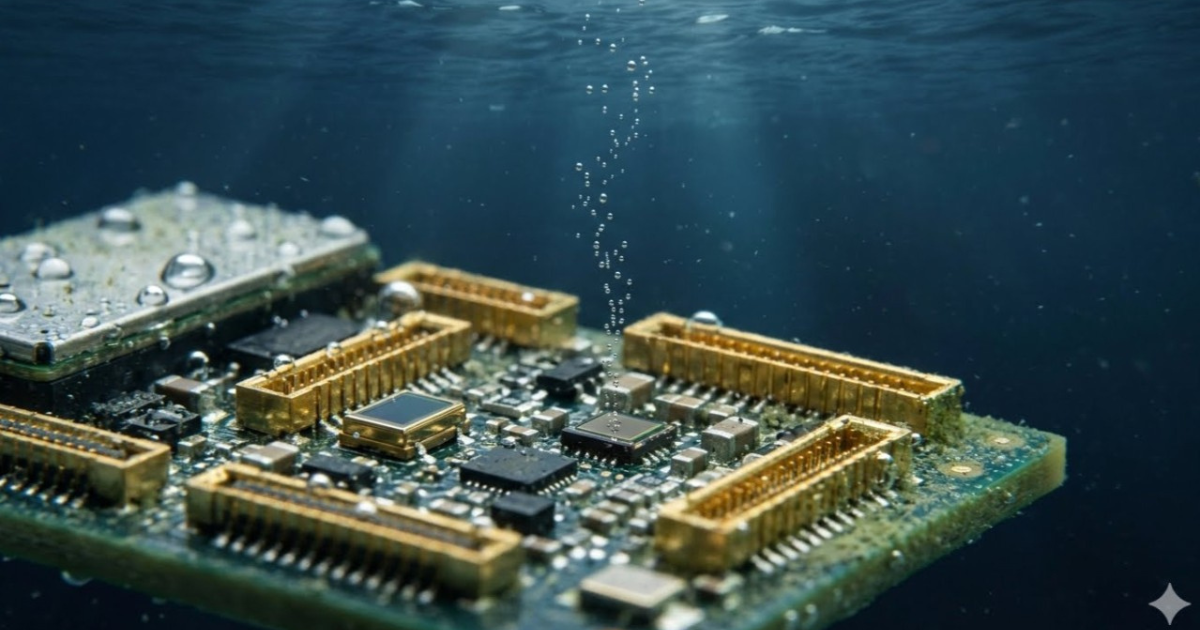

Traditional Parylene conformal coatings (primarily Types C, D, and N) have long served as the industry standard for environmental isolation in mission-critical electronics. However, the rapidly escalating demands of modern aerospace systems and deep-body biomedical implants have pushed these legacy thin-film polymers to their absolute physical limits. Historically, engineers have been forced to accept a triad of compromises involving film thickness, thermal stability, and mechanical adhesion. By fundamentally reinventing how the industry approaches vapor-phase deposition, Advanced Coating has dismantled these barriers. We deliver sub-micron thickness control, elevated thermal thresholds, and atomic-level substrate adhesion all while maintaining strict compliance with AS9100 and NADCAP aerospace quality standards.
The Triad of Conventional Limitations
1. The Thickness Dilemma
Standard Gorham-method vapor deposition polymerization (VDP) typically yields coating thicknesses ranging from 10 to 50 microns. While effective for macro-scale circuitry, this thickness introduces unacceptable parasitic mass and dimensional variations in high-density aerospace avionics. In biomedical microelectromechanical systems (BioMEMS), legacy deposition profiles alter critical surface topologies and compromise sensor sensitivity. Conventional attempts to scale down thickness result in incomplete film nucleation, leaving micro-voids, pinholes, and pathway channels that expose sensitive substrates to corrosive environments.
2. Thermal Degradation Thresholds
Legacy Parylene C exhibits a continuous service temperature limit of approximately 80°C to 100°C in oxygenated environments. Exposure past these thresholds induces rapid oxidative degradation, polymer chain scission, and subsequent loss of dielectric strength. Aerospace environments particularly low-Earth orbit (LEO) applications experiencing extreme solar radiation and atmospheric thermal cycling, demand continuous operational stability well beyond these historical limitations.
3. Interfacial Adhesion Failure
Mechanical adhesion relies heavily on micro-abrasion or coupling agents applied during pre-treatment. On complex, modern substrates like gold, platinum, titanium, and advanced liquid crystal polymers (LCP), these traditional methods provide inconsistent interfacial bond strength. Under mechanical stress, thermal expansion mismatches, or chronic moisture exposure in biological fluids, delamination occurs. This failure introduces catastrophic moisture pathways directly to active circuitry.
The Paradigm Shift: Reinventing Vapor-Phase Deposition
Advanced Coating has bypassed these legacy limitations by optimizing the molecular kinetics of the VDP process, transforming how engineers utilize the polymer.
-
Atomic-Level Interfacial Bonding: By replacing basic washes with proprietary surface activation and grafting techniques, we alter the chemical kinetics at the substrate interface. This creates covalent bonds between the substrate and the polymer chain, increasing peel strength and eliminating delamination risks on noble metals.
-
Sub-Micron, Pinhole-Free Nucleation: Through precise control of monomer pressure, pyrolysis temperatures, and deposition chamber dynamics, we achieve instantaneous, high-density molecular nucleation. This allows for the execution of continuous, pinhole-free barrier films at sub-micron thicknesses, maintaining exceptional dielectric isolation without adding unnecessary mass.
-
Extended Thermal Baselines: By utilizing variant chemistries and cross-linking optimization during the deposition phase, the polymer chains achieve a higher glass transition temperature and enhanced thermo-oxidative stability, pushing continuous service ceilings higher.
Quality Assurance and Regulatory Alignment
Implementing these advanced material breakthroughs does not require sacrificing rigorous process control. Advanced Coating operates under a mature quality management system structured directly around the demanding requirements of the global aerospace supply chain:
-
AS9100 Certification: Ensures absolute process repeatability, comprehensive risk management, and complete lot traceability from raw dimer to completed component.
-
NADCAP Accreditation: Validates that our specialized chemical processing, thermal control systems, and testing methodologies strictly adhere to rigorous aerospace industry consensus standards.
By marrying breakthrough molecular engineering with uncompromising quality frameworks, Advanced Coating provides the baseline reliability required for the future of flight and human health.
"True innovation isn't about accepting the constraints of the market; it’s about working backwards from what’s possible to completely dismantle them. For decades, legacy Parylene coatings have forced aerospace and biomedical teams to accept compromises on thermal limits, adhesion, and thickness. We refused to accept those boundaries. By fundamentally reinventing the way engineers look at Parylene, we have changed the baseline of what is possible. For our partners pushing the frontiers of space and human health, the old constraints are obsolete."
— Ernest Garcia, General Manager at Advanced Coating
At Advanced Coating, we are proving that performance protection doesn't require compromise. While maintaining the absolute highest standards of AS9100 and NADCAP compliance, our team has pushed past traditional engineering limits in thickness control, thermal stability, and atomic-level adhesion. We are opening entirely new possibilities for next-generation aerospace and biomedical technologies.
Furthermore, we secure your mission-critical data with the exact same rigor we apply to your hardware. Advanced Coating operates within a secure, ITAR-registered processing environment and maintains CMMC cybersecurity compliance.
The horizon just expanded. Contact our engineering team today to discuss your next mission.